Which Foundation Cracks Matter
Hairline shrinkage, stair-step brick cracks and the diagonal ones over doorways are not the same thing. Here is how to tell them apart before you call anyone.
- Upfront Quotes
- Slab & Pier and Beam
- Residential & Commercial
By the Round Rock Foundation Repairs team · Updated September 2026
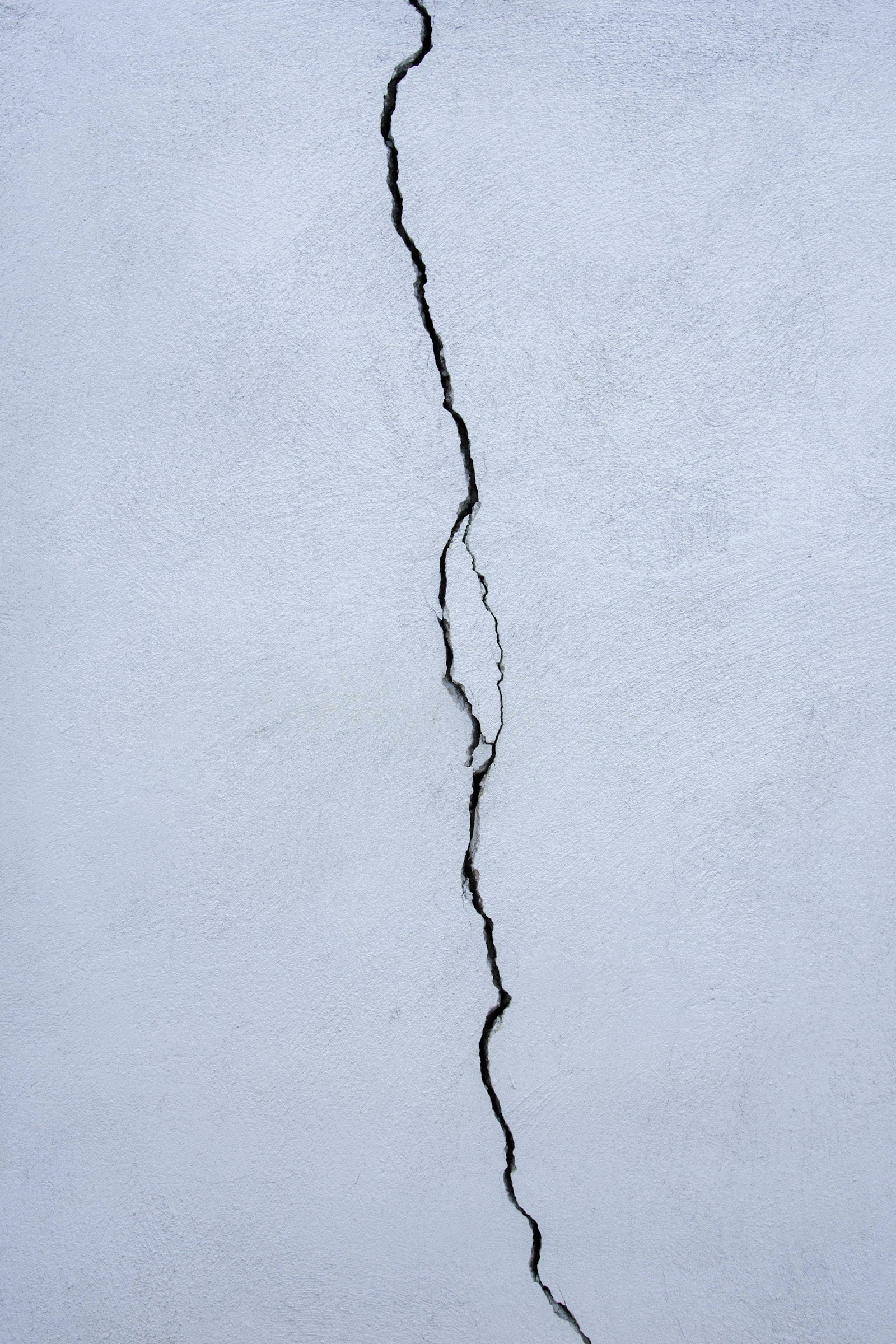
Start With Where the Crack Is
A crack means something different depending on what it is in. Drywall cracks are the easiest thing in the house to produce and the least reliable on their own. Brick and mortar are stiffer, so a crack there took more movement to create. A crack right through a concrete slab, visible in a garage floor or under lifted flooring, is different again.
So before measuring anything, note the material, the room and which wall of the house it is on. Cracks clustered on one side or one corner are far more meaningful than the same number scattered evenly.
Hairline and Shrinkage Cracks
Concrete shrinks as it cures, and fresh drywall and plaster move as a house dries out and settles into its first year or two. Fine, roughly straight cracks that stay the same width along their length, often in the middle of a wall or across a slab away from any corner, are usually shrinkage rather than movement.
They are worth filling and forgetting, provided they do not keep reopening. A crack that has been patched twice and come back both times has stopped being cosmetic, whatever it looks like.
Stair-Step Cracks in Brick
Brick cracks follow the mortar joints because mortar is weaker than brick, so movement shows up as a stepped line running diagonally up the wall. These commonly start near a corner, near a window, or above a garage opening where the wall is carrying a long span with little support.
Look at the width along the length of the crack. A stair-step that is thin at one end and noticeably open at the other is telling you one end of that wall has moved relative to the other. Also check whether the brick courses still run level; sighting along a mortar line from one corner is surprisingly revealing.
Diagonal Cracks From Door and Window Corners
Inside, the most telling cracks run at an angle away from the upper corner of a door or window opening. That is the wall going out of square around the weakest point. If the door in that opening has also started catching, the two symptoms together are worth acting on.
The same crack can appear over an arch or a wide opening between rooms. What matters is whether it keeps growing and whether the floor beneath the same area reads low when measured.
Wide, Horizontal and Displaced Cracks
A crack where one side sits proud of the other, so you can feel a step with your fingertips, means the two sides have moved in different planes rather than just apart. That is worth a professional look sooner rather than later.
Long horizontal cracks in a masonry wall are also worth attention, because they can indicate pressure against the wall rather than settlement beneath it. Do not start removing material around a crack to investigate; photograph it and have it inspected.
How to Record a Crack Properly
Take a photograph straight on with something for scale, a tape measure or a coin, and note the date. Mark the end of the crack with a light pencil tick and date that too. Repeat in three months.
Those records turn a discussion into evidence. They also make a real difference in a sale, a builder warranty conversation or a second opinion on a repair quote, because a dated series of photographs is much harder to dismiss than a recollection.
Cracks in Round Rock and Nearby
In Round Rock, the brick veneer on the vast majority of the housing stock is the most honest reporter you have. Because it is stiff and the joints are regular, it records movement clearly at corners and around openings. On deep clay east of I-35 those cracks often open through a drought summer and close again after winter rain, which is why the same crack can look alarming in September and unremarkable in March.
Older houses need reading differently. Around the historic parts of Georgetown and the original downtown here, plaster, wood siding and stone all crack in their own ways, and a crawl space underneath means the floors tell you more than the walls do. Our Georgetown page covers those houses, and pier and beam repair explains what the work looks like.
Arrange an Inspection
A crack tells you something has moved. It does not tell you how much, which is why elevation readings matter. Round Rock Foundation Repairs measures the floor across the house, walks the outside and explains what the numbers mean before any repair is discussed. Start on the inspection page.
If the readings point to piers, the pier comparison covers the decision ahead of you. If they point to moisture, the watering guide is the cheaper place to start. Either way you can ask for a visit.