Foundation Problem Warning Signs
The signs that usually appear first, what they mean when they show up together, and which ones are worth a phone call rather than a tube of filler.
- Upfront Quotes
- Slab & Pier and Beam
- Residential & Commercial
By the Round Rock Foundation Repairs team · Updated September 2026
Doors and Windows Usually Go First
Most people notice a door before they notice a crack. A front door that used to swing shut now catches at the top corner, or a bedroom door that has always closed cleanly needs a shove. Windows do the same thing: one sash binds while the identical window on the other side of the house works perfectly.
The reason is simple. Door and window openings are the weakest points in a wall, so when the structure around them shifts even slightly, the opening goes out of square and the door no longer matches it. That is why a single sticking door on one side of the house is more informative than a dozen tiny cracks spread evenly everywhere.
Write down when it started. If the door began catching in August and eased off in February, that pattern points to seasonal soil movement. If it has got steadily worse for two years without ever improving, that is a different story and worth measuring.
Cracks That Deserve a Second Look
Not every crack means trouble. Fine hairlines in fresh plaster and paint are normal, and so are shrinkage cracks in a concrete slab or driveway. What earns attention is direction, width and change.
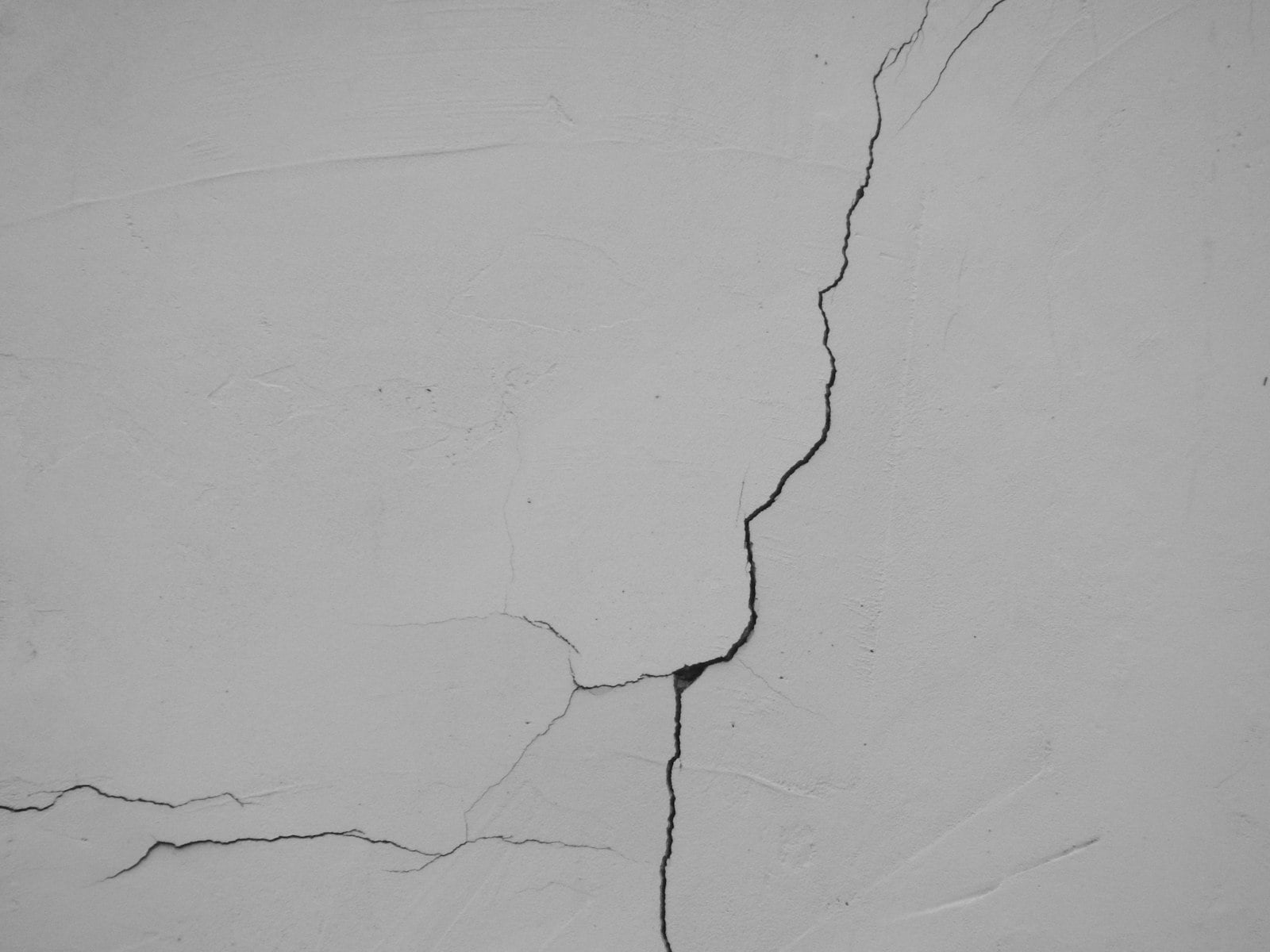
Diagonal cracks running away from the upper corner of a door or window are the classic sign of the wall above an opening being pulled out of square. Outside, stair-step cracks through the mortar joints of brick, usually starting near a corner, say the same thing in masonry. Cracks that are noticeably wider at one end than the other are worth recording carefully.
The useful test is not width on its own but whether the crack is changing. Photograph it with a tape measure or a coin beside it, date the photo, and take another in a few months. That simple record is worth more than any amount of argument later.
Floors, Trim and Gaps
Floors tell you about the middle of the house, which cracks in the walls often do not. A ball that rolls the same direction in more than one room is a reasonable hint. So are cabinet doors that swing open on their own and a visible wedge of daylight where a baseboard meets the floor.
Look for separation at the joints between things that should be tight: countertop against the wall, crown molding pulling down from the ceiling, tile grout cracking in a straight line across a room. In an older house with a crawl space, a springy or bouncy patch of floor usually means a support below has settled or a joist has given way, which is a different repair from a slab problem.
What the Outside Is Telling You
Walk the perimeter after a dry spell and look at the soil beside the slab. A gap you can push your hand into means the clay has shrunk away from the foundation, which is exactly when a slab edge loses its support. Then walk it again after a storm and see where water stands.
Check the gutters and where the downspouts empty. Roof water dumped a foot from the wall is one of the largest single sources of uneven moisture around a house. Look for a chimney leaning away from the wall behind it, a porch or patio separating from the house, and any brick course that has stopped running level along its length.
When It Is Just the Season
Houses on clay move every year. A little sticking in late summer that eases after winter rain is the soil doing what soil here does. The signs that matter are the ones that persist through a full wet and dry cycle, or that get worse each year instead of returning to where they were.
This is also why one visit sometimes cannot give a definitive answer on a borderline house. Two sets of elevation readings taken a season apart show movement that no single snapshot can. That is a legitimate recommendation, not a stalling tactic.
Warning Signs in Round Rock Houses
Round Rock straddles a real dividing line. East of I-35 the Blackland Prairie clay is deep and highly active, so seasonal movement is pronounced and the signs above appear and disappear with the weather. West toward the escarpment, soil over limestone is thinner and lots were often cut and filled, so the trouble is more likely to be one part of a house settling into fill while the rest sits on rock.
Older houses near the original downtown are frequently on crawl spaces, where bouncing floors and gaps at baseboards matter more than brick cracks. Newer subdivisions further out are slabs, sometimes post-tension, where a dropped corner after a drought summer is the usual complaint. Similar patterns show up across the county, including the deep clay covered on our Hutto foundation repair page.
Arrange an Inspection
If the signs are adding up, the next step is measurement rather than opinion. Round Rock Foundation Repairs takes elevation readings room by room, walks the outside for drainage and trees, and explains what the numbers mean. Book it on the inspection page.
Before that, it is worth reading which cracks matter so you know what to photograph, and the drainage page if water is standing anywhere near the house. When a repair is on the table, our pier comparison covers the choice you will be asked to make, or you can simply request a visit.